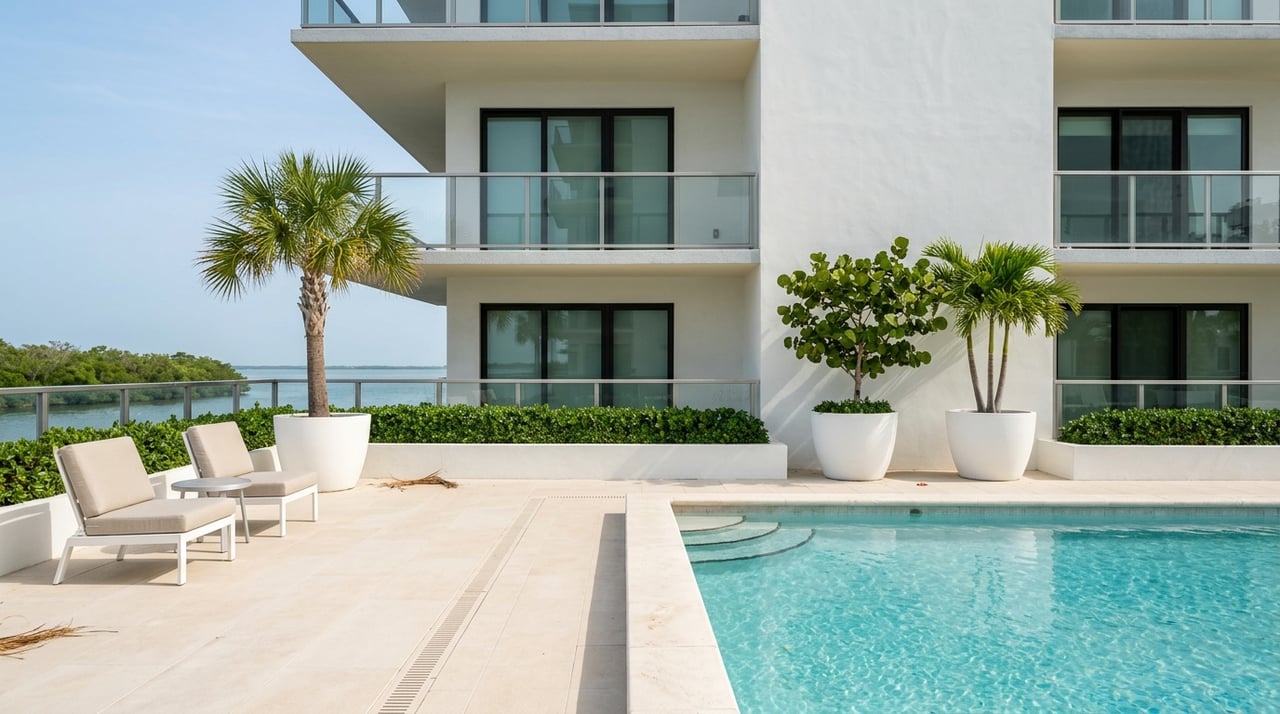
Is St. Petersburg Waterfront Condo Living Right for You?
June 18, 2026
June 18, 2026
Wondering if a waterfront condo in St. Petersburg is the right fit for your lifestyle? It can be an exciting move, especially if you want water views, walkable surroundings, and less day-to-day exterior maintenance than a single-family home. The key is knowing that bayfront condo living comes with its own rules, costs, and risk factors, and understanding those details can help you buy with confidence. Let’s dive in.
Waterfront condo living in St. Petersburg is often centered around the downtown waterfront, Beach Drive, the Pier District, and nearby bayfront areas like Shore Acres, Snell Isle, and Venetian Isles. These areas are closely tied to the city's bayfront lifestyle and give you access to both scenic views and urban conveniences.
If you picture waterfront living as only a quiet beach setting, St. Petersburg offers something different. Downtown waterfront living is more connected, active, and walkable, with parks, public gathering spaces, shops, galleries, and dining woven into everyday life.
The St. Pete Pier adds another layer to that experience. According to official city and Pier information, the area includes 26 acres of promenade, water access, dining, shops, and public space, plus a free Downtown Looper trolley with Pier stops every 15 minutes and onsite security available 24/7.
For many buyers, the appeal comes down to lifestyle tradeoffs. You may give up yard space, but gain water views, easier lock-and-leave ownership, and close access to downtown amenities.
That can make waterfront condos attractive if you want a primary home with less exterior upkeep, a part-time residence, or a second-home style setup. In practice, many buyers are choosing convenience and location over square footage outside the unit.
Amenities also shape the decision. In St. Petersburg’s waterfront condo market, some buildings may offer features like concierge service, fitness centers, pools, club rooms, kayak storage, launching docks, saunas, or deep-water boat docks.
It is important to remember that these are building-specific features, not guaranteed standards across the market. When you compare condos, the amenity package should be judged building by building.
In Florida, condo purchases are highly document-driven. Before closing, buyers should review the declaration, articles, bylaws, rules, annual financials, budget, required FAQ and governance materials, and any milestone inspection summary, reserve study, or statement that none exists.
These documents matter because they control how the community operates. They can affect your daily life, your costs, and your ability to use the property the way you want.
You should also verify practical rules before making an offer. That includes rental limits, pet policies, and any approval process for renovations or updates inside the unit.
Florida law also gives buyers certain rescission rights if required documents are not delivered correctly under Section 718.503. That makes document review more than a formality. It is one of the most important parts of the buying process.
One of the biggest myths about condo ownership is that it is always simple and low-cost. A condo can reduce your personal maintenance workload, but that does not mean maintenance disappears.
Under Florida law, the association is generally responsible for maintaining, repairing, and replacing common elements and association property. Depending on the declaration, some limited common elements may be assigned to the owner instead.
For you as a buyer, that means the health of the association matters a lot. The easy-maintenance lifestyle works best when the board is keeping up with major systems and properly funding reserves.
That includes items like the roof, structure, waterproofing, windows, and other shared building components. If those items are underfunded or deferred, owners may feel the impact through special assessments, rising dues, or tougher resale conditions.
Waterfront HOA dues can also be higher than inland condo dues because associations often budget for a wide mix of expenses. Florida law shows that these budgets may include insurance, management, security, recreation facilities, utilities, administration, building maintenance and repair, and reserves.
In today’s Florida condo market, building condition is not a side issue. It is a major part of both underwriting and resale.
Florida requires milestone inspections for residential condo and co-op buildings that are three or more habitable stories tall once they reach 30 years of age, and every 10 years after that. If the local enforcement agency has adopted earlier timing, the first inspection may be required at 25 years, measured from the certificate of occupancy.
Florida also requires structural integrity reserve studies at least every 10 years for those taller buildings. For many existing owner-controlled associations, the deadline for the study was December 31, 2025.
These studies cover major components such as the roof, structure, fireproofing, plumbing, electrical systems, waterproofing, exterior painting, and windows and exterior doors. As a buyer, this information can give you a clearer picture of future costs and the building’s physical condition.
Flood risk is a core part of the waterfront condo conversation in Pinellas County. The county states that everyone lives in a flood zone, and flood zones are not the same thing as evacuation zones.
That distinction matters when you are comparing buildings. A condo may sit in one type of flood zone while also being subject to a different evacuation plan during storms.
Pinellas County also notes that most homeowners policies do not cover flood damage. Flood insurance is required for federally backed mortgages in high-risk flood zones, and the county provides address-based flood-zone, storm-surge, and evacuation-zone mapping tools to help buyers check a property.
There is one bit of encouraging news on cost. Pinellas County’s CRS rating change increased flood-insurance discounts from 35% to 40% as of April 1, 2024, which may help offset premiums in some situations.
Insurance for a condo is different from insurance for a single-family home. In Florida, unit owners typically need an HO-6 policy.
That policy usually helps cover personal property, liability, and certain interior building items that are not covered by the association’s master policy. According to Florida consumer guidance, the association’s policy generally does not cover contents, floor coverings, wall coverings, ceiling coverings, appliances, cabinets, window treatments, and similar interior items.
Florida guidance also says the HO-6 policy must include at least $2,000 of loss-assessment coverage. That matters because associations may assess unit owners for common-area damage when reserves or insurance proceeds are not enough.
For waterfront condos, you should also confirm how the association’s property and flood policies are structured, what deductibles apply, and whether separate flood coverage will be needed for the unit. Getting clear answers early can prevent expensive surprises later.
If you are weighing a waterfront condo against an inland option, price is usually part of the equation. Countywide data from March 2026 showed a median sale price of $295,000 for townhouses and condos in Pinellas County, compared with $456,000 for single-family homes.
That price gap helps explain why many buyers see condos as a relative affordability play. At the same time, waterfront condos usually carry added variables tied to views, location, building amenities, insurance, and association complexity.
The same countywide report showed 4,163 active condo and townhome listings and 8.1 months of supply, which is above the report’s 5.5-month balanced-market benchmark. In practical terms, that may give buyers more negotiating room than they would see in a tighter seller’s market.
Still, value should not be judged on price alone. A lower price in a building with deferred maintenance or weak reserves may not feel like a bargain once ownership costs are fully understood.
When it comes time to sell, the view is only part of the story. In today’s market, resale strength is often shaped by the building’s financial and physical condition.
Because Florida law requires key association disclosures, informed buyers tend to look closely at budgets, reserve studies, and inspection-related materials. A building with stronger reserves and a cleaner maintenance profile is often easier to market than one with visible deferred issues or assessment exposure.
That does not guarantee resale results, but it is the practical lens many buyers use. If you buy in a well-managed building, you may benefit later from that same buyer confidence.
A waterfront condo in St. Petersburg can be a great fit if you want a lower-maintenance lifestyle, access to the downtown waterfront, and the everyday benefit of living near the bay. It can also be a smart option if you value walkability, shared amenities, and a property that feels easy to lock and leave.
At the same time, waterfront ownership asks you to pay closer attention to HOA finances, inspection history, insurance details, and flood exposure. The goal is not to avoid these properties. The goal is to understand them clearly before you commit.
If you are comparing bayfront buildings, inland alternatives, or different ownership styles across St. Petersburg, having local guidance can make the process much easier. When you are ready to explore your options, connect with Khristian Marcotrigiano for responsive, local help tailored to your goals.
Stay up to date on the latest real estate trends.

Get assistance in determining current property value, crafting a competitive offer, writing and negotiating a contract, and much more. Contact me today.