Jacksonville Beach Small Lot Renovation Ideas for 50‑Foot Lots
November 6, 2025
November 6, 2025
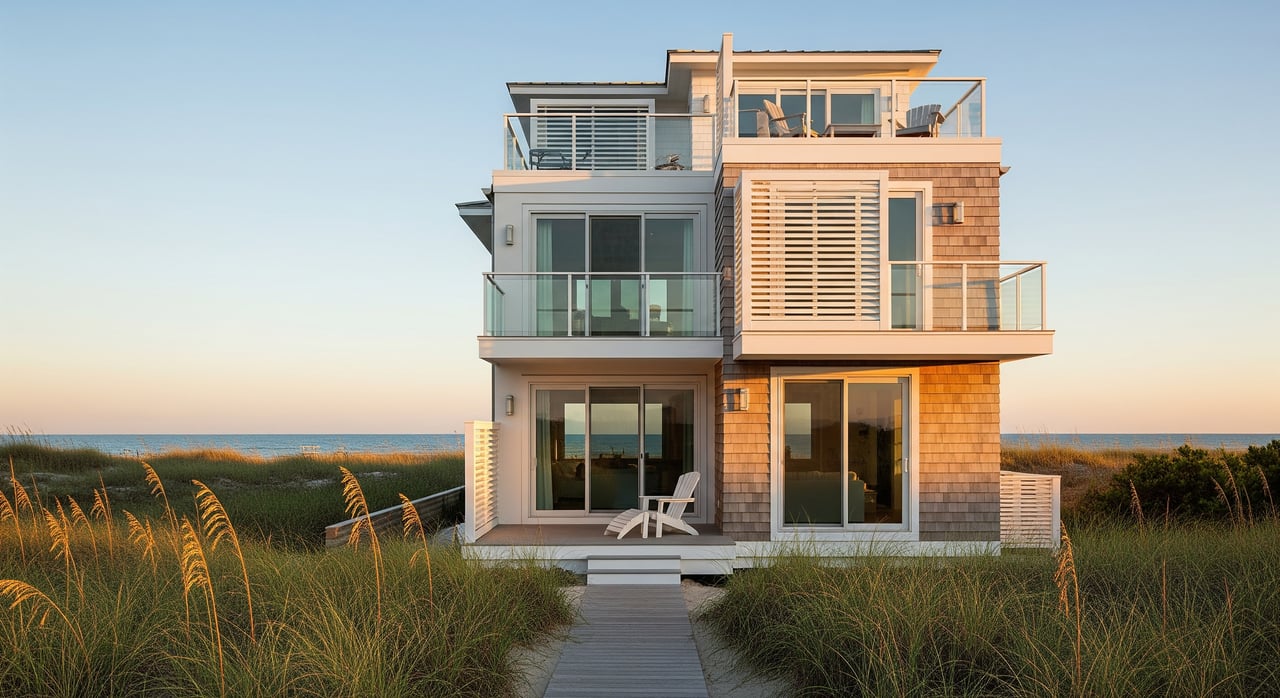
You do not need a sprawling parcel to live well by the ocean. If you own or are eyeing a classic cottage on a 50-foot lot in Jacksonville Beach, you can create a bright, functional home that feels much larger than the footprint suggests. The key is understanding the rules that shape what is possible, then using smart design to make every square foot work.
In this guide, you’ll learn what to verify with the city, how flood elevation affects layouts, and practical ways to add livability without overbuilding. You’ll also get a clear checklist for due diligence and budgeting so you can plan with confidence. Let’s dive in.
Before you sketch a floorplan, confirm the regulations that apply to your specific lot. Jacksonville Beach has local zoning standards, and coastal properties also face state and federal requirements.
Your first stop should be the City of Jacksonville Beach Planning and Building Department and the city’s Land Development Code. Ask for your exact zoning district and how the city measures height on your block. Confirm:
Side setbacks on narrow-lot neighborhoods are often as small as 5 feet, but these numbers vary by zone and interpretation, so get the city’s official determination in writing.
Check the FEMA Flood Insurance Rate Maps and confirm your base flood elevation with the city’s floodplain administrator. If your lot sits in VE or AE zones, you will likely elevate living space above the required level and place parking and storage below. Many Florida cities require additional freeboard above the base flood elevation. Elevation can change how you stack rooms, where you place mechanical systems and the cost of improvements.
Ask the city about minimum off-street spaces, driveway width limits and curb cut policies. On a 50-foot lot, these rules affect garage options and how much front yard you can keep permeable for stormwater.
Expect separate permits for structural work, mechanicals, electrical, plumbing, site work and any demolition. If you need a setback or height variance, factor in hearing timelines and fees. A pre-application meeting with city staff can save time and redesign costs.
A simple envelope exercise helps you right-size your plan.
These numbers are illustrative, not approvals. They show why vertical strategies and outdoor layers are so valuable on 50-foot lots.
Smart organization beats square footage. Focus on daylight, air flow and compact circulation.
For elevated beach homes, a common pattern works well:
This approach places daily life where the light and views are strongest and keeps private areas quiet and efficient.
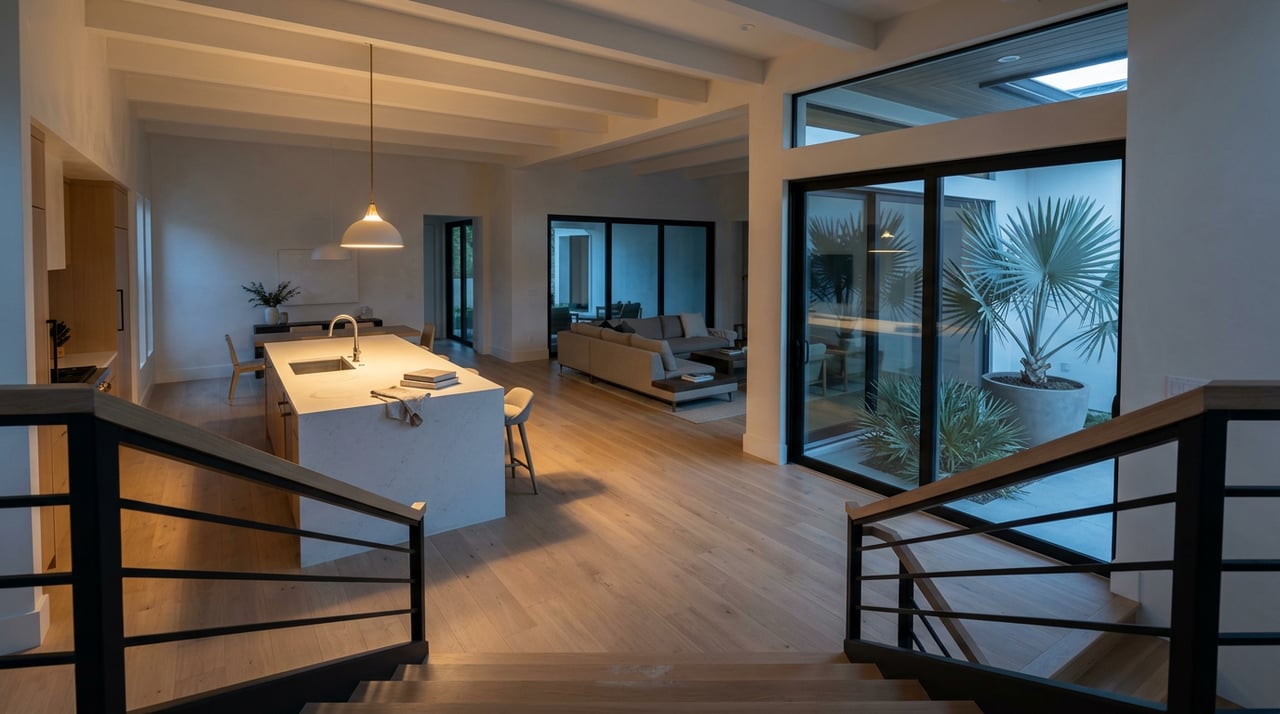
Use a central or rear stair that doubles as a light well. Open treads and a skylight or window at the landing bring daylight deep into the plan, reducing the need for interior hallways. A compact stair and mechanical chase planned early will free up more usable rooms and wall space for windows and storage.
Pocket doors and sliding panels let spaces expand and contract. An office that opens to the living area can become a guest room when needed. Thoughtful furniture layouts and changes in flooring or ceiling height can define zones without building more walls.
Efficient galley or L-shaped kitchens with island seating work well in a 40-foot buildable width. Stack bathrooms and laundry to simplify plumbing. Keep private room ceiling heights a bit lower so you can enjoy taller ceilings in living spaces without stressing a tight height limit.
On narrow lots, consider a small interior light well or compact courtyard to pull sun and air into the middle of the home. Clerestory windows and high transoms on side walls keep privacy while feeding natural light to living areas.
Thoughtful outdoor layers can make a compact house feel expansive.
Front and rear porches extend living space and provide shade. A slim side courtyard with a trellis or green wall can become a quiet outdoor nook for morning coffee. Continuous porches or breezeways connect spaces and encourage cross-ventilation.
Rooftop terraces and upper balconies capture views without expanding the footprint. Verify height limits, guardrail codes and structural support. Be mindful of neighbor privacy and any visibility rules.
Use permeable pavers, rain gardens and bioswales to handle runoff and meet local stormwater requirements. Capturing downspouts into rain barrels or a small cistern provides irrigation for container gardens and reduces street discharge.
Fences, trellis screens and pergolas define comfortable outdoor rooms. Choose rot-resistant materials that can handle coastal exposure, and place HVAC and pool equipment in screened, well-ventilated spots that are easy to service and, if required, elevated above flood levels.
Parking is solvable with the right layout.
Design driveways with permeable materials where allowed and organize beach gear to reduce pressure on garage area. If you convert ground-level space to living area, confirm how you will meet off-street parking requirements or whether a variance is needed.
Building for wind and water protects your investment and can lower long-term costs.
A focused checklist will keep you on track before you buy or renovate.
Renovating or elevating a beach cottage can be rewarding, but costs add up.
The most successful small-lot projects begin with early calls to the right people. Contact the City of Jacksonville Beach Planning and Building Department to confirm setbacks, height limits and any design overlays. Check parcel data and easements through the Duval County Property Appraiser and county GIS. Use FEMA’s mapping tools to confirm your flood zone and base flood elevation, then apply Florida Building Code guidance as you shape the structure. For coastal permitting questions, speak with the Florida Department of Environmental Protection.
Bring in a licensed architect or coastal engineer experienced with Jacksonville Beach to align structure, elevation and mechanical placement with your goals. Choose a contractor who regularly builds or elevates homes in beach environments and understands local permitting. A short pre-application meeting with city staff and a coordinated team can save weeks and reduce change orders.
Ready to map out a small-lot strategy that fits your lifestyle and budget? Whether you are exploring a coastal move or preparing to list in Florida, our team can help you plan, connect with the right local pros and move forward with confidence. Connect with Unknown Company to get started, and if you are selling, ask about our Get Your Instant Home Valuation to explore pricing and timing.
Stay up to date on the latest real estate trends.
Get assistance in determining current property value, crafting a competitive offer, writing and negotiating a contract, and much more. Contact me today.