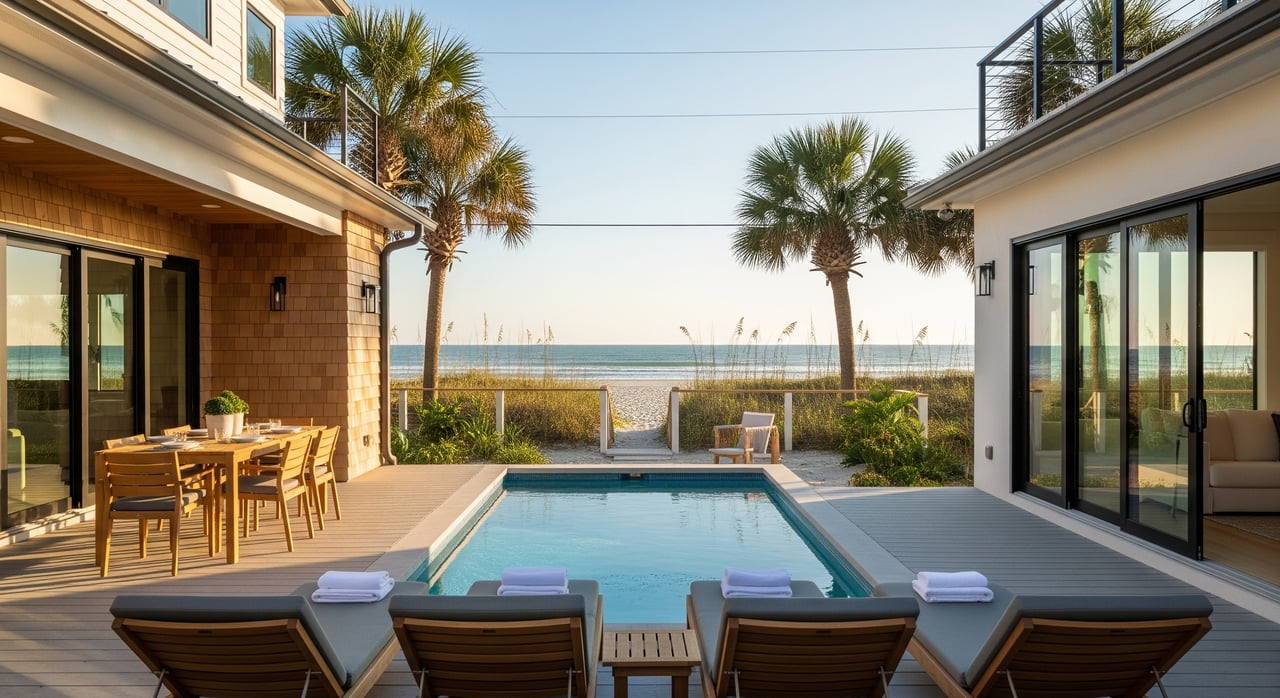
Jacksonville Beach Short‑Term Rentals and Market Impact
October 16, 2025
October 16, 2025
Thinking about buying or selling near the sand in Jacksonville Beach and wondering how short‑term rentals shape prices, rules, and neighborhood life? You are not alone. With hundreds of beach homes and condos listed for weekend and weekly stays, STRs touch almost every part of the market. In this guide, you will see what the data says, what the city requires, and how to plan your next move with confidence. Let’s dive in.
AirDNA’s market dashboard reports roughly 1,300 active short‑term rental listings in Jacksonville Beach as of October 2025. This scale helps explain why STRs are a frequent topic at city hall and in neighborhood conversations. Counts shift month to month as new listings launch and others pause, so use the vendor and date when you quote a number. AirDNA’s Jacksonville Beach overview is a useful benchmark.
Across 2024 to 2025 snapshots, market trackers commonly show occupancy in the mid‑50s to high‑60s percent range and average daily rates roughly 200 to 320 dollars. Vendors also estimate median annual host revenue in the low‑to‑mid five figures, depending on property type and season. Treat these as directional estimates, not guarantees, and always tag the data source and date.
Demand typically rises in spring and summer and spikes around holidays, with some trackers flagging March as a top revenue month. Coastal events and festivals can create short windows of strong bookings. See a seasonal read from Airbtics on Jacksonville Beach revenue patterns.
Peer‑reviewed research finds a positive but modest link between STR growth and higher rents and home prices. At the median ZIP code, a 1 percent increase in Airbnb listings correlates with about a 0.018 percent rise in rents and a 0.026 percent rise in home prices. Effects tend to be stronger where owner‑occupancy is lower. You can review the methodology in the Marketing Science study by Barron, Kung, and Proserpio on STR impacts to prices and rents.
Neighbors and local media often point to full‑home conversions, more investor activity, and quality‑of‑life concerns such as noise, trash, and parking. City officials and residents have also highlighted safety issues tied to a small share of problem properties. For recent reporting on safety concerns and policy responses, see First Coast News coverage of STR issues in Jacksonville Beach.
Jacksonville Beach treats STRs as transient lodging and requires a Short‑Term Vacation Rental Certificate. There is a fire‑marshal inspection for initial issuance or changes, and an annual renewal due by October 1. The city also directs operators to obtain a local business tax receipt and follow all county and state rules. See the city’s official requirements on the Short‑Term Vacation Rentals page.
Duval County collects a Convention and Tourist Development Tax that is generally treated as a combined 6 percent, in addition to Florida sales tax and any local surtax. Hosts must register and file returns through the county portal. Review registration and filing steps on the Duval County Tax Collector’s TDT page.
Platforms sometimes collect and remit certain taxes at checkout, but hosts are still responsible for registration and reporting. Verify current platform practices and your obligations. A practical summary is available in this Duval County TDT explainer for hosts.
The city emphasizes neighborhood standards and responds to complaints about noise, parking, trash, and party houses. Repeat violations can lead to fines and suspension of STR privileges. You can find complaint and enforcement information through the city’s STR guidance linked above.
If you are buying near the beach, consider both your goals and the property’s surroundings.
If your property has been used as a short‑term rental, documentation helps buyers move forward.
In 2024, a statewide proposal to standardize STR rules, SB 280, was vetoed. That preserved local control, including Jacksonville Beach’s registration and inspection program. Keep an eye on future sessions for changes to state preemption and local authority. You can track bill history on the Florida Senate SB 280 page.
Short‑term rentals are a meaningful part of Jacksonville Beach’s housing and visitor economy. They can add income opportunities and local tourism spending, while also creating real tradeoffs for housing availability and neighborhood quality. If you align your strategy with the city’s rules, the tax framework, and realistic revenue assumptions, you can make a smart move in today’s Beaches market.
If you want a clear, data‑driven plan for buying or selling a Florida beach property, connect with Khristian Marcotrigiano for guidance tailored to your goals.
Stay up to date on the latest real estate trends.
Get assistance in determining current property value, crafting a competitive offer, writing and negotiating a contract, and much more. Contact me today.