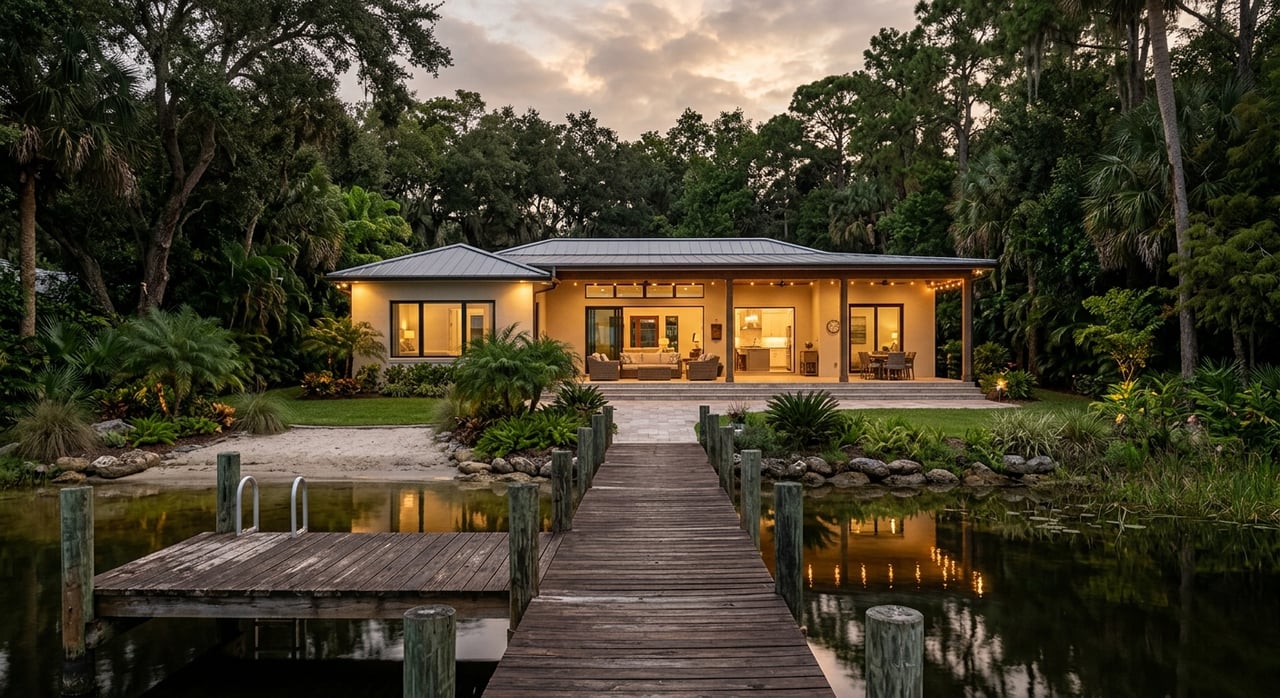
What to Know Before Buying Odessa FL Acreage Homes
May 21, 2026
May 21, 2026
Dreaming about more land, more privacy, or a home on the water in Odessa? It is easy to fall in love with the view, the trees, or the idea of having room to spread out. But with acreage and lakefront property, what you are really buying goes far beyond the house itself. This guide will help you understand the key checks that matter in Odessa, FL so you can move forward with more confidence. Let’s dive in.
Acreage and lakefront properties in Odessa often fall under different zoning and land-use categories than a typical home in a standard subdivision. Pasco County’s GIS mapping includes rural and estate-style districts such as AG/R, R-1, and estate-residential classifications, along with future land-use categories tied to agricultural, residential, conservation, and wetlands or lakes overlays.
That matters because the parcel itself may affect what you can build, expand, or change later. Pasco County also states that its zoning GIS is informational only and not a legal survey, so you should treat online map results as a starting point, not a final answer.
Before you focus only on price or square footage, ask what the exact parcel allows. On acreage or lakefront property, zoning and future land use can shape whether you can add a barn, detached garage, guest space, fence, driveway, or other improvement.
In Pasco County, the answer can vary from lot to lot. A property may look similar to nearby homes, but that does not mean it has the same permissions, overlays, setbacks, or development limits.
Pasco County’s residential permit requirements show how detailed this review can get. For new residential construction, the county may require flood-zone identification, wetland delineation, easements with dimensions, drainage plans, finished-floor elevation, and setbacks from wetlands or the mean high water line for waterfront properties.
Even if you are not planning new construction right away, those same issues can affect future changes. A new fence, accessory building, driveway revision, or shoreline improvement may involve more review than you would expect in a typical neighborhood setting.
Many Odessa acreage properties rely on private wells instead of public water. Florida’s Department of Health recommends testing private well water for bacteria and nitrate at least once per year, and it also notes that the state does not require routine private-home well sampling at the time of sale.
That means you should not assume the water has been tested recently just because the home is listed. If a property has a private well, it is smart to ask for the most recent testing records and clarify the well’s location and service history.
If the property is on septic, that system deserves real attention during due diligence. Pasco County Department of Health states that new installations, repairs, modifications, and approvals of existing septic systems require a permit.
Florida DEP also notes that onsite sewage systems are regulated through permitting and inspection to protect groundwater. For you as a buyer, that means the age, condition, location, and service history of the septic system can directly affect both cost and usability.
Flooding can affect more than the house itself. It can also impact the usability of the land, the safety of a private well, the condition of a septic system, and your insurance costs.
Pasco County’s permit checklist requires flood-zone identification for residential projects, and FEMA flood maps show flood zones, floodplain boundaries, and base flood elevation. If a property is in a high-risk A or V flood zone and you are using a federally backed mortgage, flood insurance is required.
Just as important, flood damage is not typically covered by a standard homeowners policy. In Florida, buyers should look closely at whether separate flood coverage is needed and what the insurance quote actually includes.
A dock, lift, shoreline improvement, or other waterfront feature can be a major reason a buyer chooses a lakefront home. But these features are not one-size-fits-all from a permitting standpoint.
Florida DEP states that dredging and filling in wetlands and other surface waters is regulated through the Environmental Resource Permit program. DEP also explains that dock approvals can fall into different categories, including exemptions, general permits, or individual permits, depending on the site, waterbody, and size or design of the structure.
For Odessa buyers, the practical takeaway is simple: never assume an existing or planned dock project is straightforward. Waterfront improvements are highly site-specific.
Insurance can change the numbers on an acreage or lakefront purchase faster than many buyers expect. Along with possible flood insurance needs, Florida buyers should understand hurricane deductibles.
The Florida Chief Financial Officer’s consumer guide explains that insurers must offer hurricane deductible options of $500, 2%, 5%, or 10% of dwelling or structure limits. Because this deductible works separately from standard policy deductibles in certain situations, it is worth reviewing quotes carefully before your contract becomes hard to unwind.
When you are buying acreage or lakefront property in Odessa, it helps to keep your review organized. A clear checklist can help you spot issues early and avoid surprises later.
| Review Item | Why It Matters |
|---|---|
| Zoning and future land use | Helps confirm what the parcel allows now and in the future |
| Wetlands and overlays | May affect buildability, setbacks, and permitting |
| Flood-zone review | Can affect insurance, financing, and future improvements |
| Well review | Helps verify water source, testing history, and flood impact |
| Septic review | Helps assess condition, permit history, and repair options |
| Easements and access | Can affect use of the land and site planning |
| Dock or shoreline permissions | Important for waterfront features and future work |
| Insurance quotes | Clarifies flood coverage and hurricane deductible costs |
With Odessa acreage and lakefront homes, there are often multiple agencies, maps, and approval paths involved. County GIS tools are useful, but Pasco County clearly notes they are informational only, which is why parcel-specific verification matters.
This is where working with a local advisor can make the process smoother. You want someone who can help you connect the property details, inspection planning, permit questions, and insurance follow-up before closing, especially when you are balancing lifestyle goals with practical risks.
If you are considering acreage or lakefront property in Odessa, the right strategy is to slow down just enough to verify the details that matter. For help navigating the process with responsive local guidance, connect with Khristian Marcotrigiano.
Stay up to date on the latest real estate trends.
Get assistance in determining current property value, crafting a competitive offer, writing and negotiating a contract, and much more. Contact me today.